
UGC Directs Universities To Integrate SWAYAM Online Courses Into July 2026 Semester
The move will encourage eligible students to register before the specified deadlines and ensure that the courses become an integral part of academic curriculum rather than optional additions.

NEW DELHI: In a shift towards a more flexible, technology-driven future in India’s higher education system, the University Grants Commission (UGC) has instructed Higher Education Institutions (HEIs) across India to integrate approved SWAYAM Massive Open Online Courses (MOOCs) into their academic curriculum from the July 2026 semester.

The directive represents a shift for embedding the online learning as an essential part of university education.
The latest announcement reinforces the goals of the National Education Policy (NEP) 2020, which promotes multidisciplinary learning, academic flexibility and wider access to quality education.
The UGC has asked universities and colleges to map the approved SWAYAM courses that complement their existing degree programmes with their curriculum.
The move will encourage eligible students to register before the specified deadlines and ensure that the courses become an integral part of academic curriculum rather than optional additions.
Eligible universities can now conduct SWAYAM examinations on their own campuses under the UGC framework, making the assessment more convenient for students while encouraging greater adoption of online learning.
📢 UGC has requested Higher Education Institutions to identify and academically integrate approved SWAYAM MOOCs for the July 2026 Semester.
🎓 HEIs are requested to map relevant SWAYAM courses with their academic programmes, facilitate student registration before the respective… pic.twitter.com/ZA2sZNOenK
— UGC INDIA (@ugc_india) July 6, 2026
Universities will need to identify appropriate SWAYAM courses that genuinely complement their curriculum rather than creating duplication. Faculty members must guide students in selecting relevant courses and monitor academic progress.
Administrative coordination is equally important. Timely registration, credit mapping, examination scheduling and academic record management will determine how effectively the new framework functions.
Digital accessibility also remains a consideration, particularly for students in regions where internet connectivity may still pose challenges.
Instruction to HEIs
- The HEIs need to circulate the list of approved SWAYAM courses among Deans, Heads of Departments, SWAYAM University Nodal Officer (SWAYAM UNO) of your institution.
- Universities must integrate approved SWAYAM MOOCs into the July 2026 semester.
- Courses should be mapped with existing degree programmes.
- Students must be encouraged to register before course deadlines.
- Institutions can conduct SWAYAM examinations on their own campuses.
- The initiative supports credit transfer and flexible learning under NEP 2020.
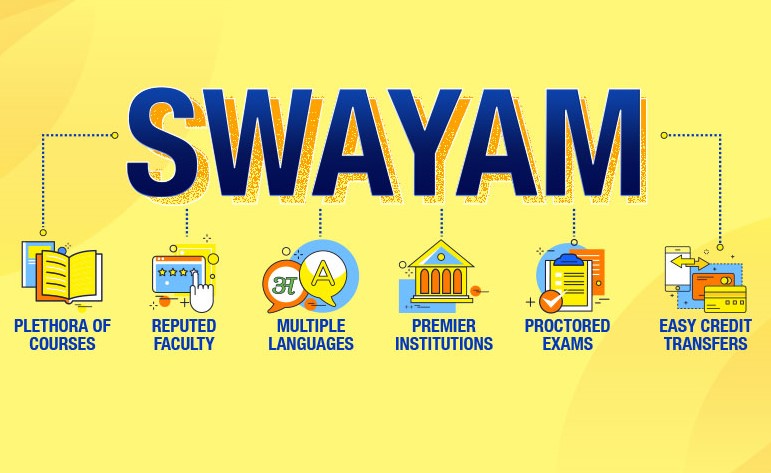
The SWAYAM platform has steadily evolved into one of India’s largest digital education ecosystems. By integrating these courses into university curricula, students gain access to expert faculty, updated learning materials and specialised subjects that may not be available within their own institutions.
How it is beneficial to students
This move is significant because it bridges geographical and institutional gaps, ensuring that students from diverse regions can access the same quality of learning resources.
Students will enjoy the advantages of integrating SWAYAM MOOCs, ensuring increased academic flexibility.
Students can explore subjects beyond their core discipline, helping them build interdisciplinary knowledge and industry-relevant skills.
Now, a commerce student wishes to study data analytics or an engineering student wants to learn entrepreneurship, SWAYAM enables such choices without requiring a change in degree programme.
The UGC Credit Framework already allows universities adopting SWAYAM regulations to recognise eligible online courses for academic credit transfer. This creates a more personalised educational journey while supporting lifelong learning.
How it is beneficial to universities
The directive is not only beneficial for students but also offers several advantages for universities.
Institutions can expand their academic offerings without introducing entirely new departments or hiring additional faculty for every specialised subject.
They can leverage high-quality online courses developed by experts while focusing their own teaching resources on mentoring, discussion and practical application.
The ability to conduct SWAYAM examinations on campus simplifies administration and improves student participation.
Comments are closed.