
Mastering Entrepreneurship: Pursue These Real-World Skills To Build Core Competency
Be it launching your first startup or scaling an existing venture, mastering these core competencies can help you achieve greater heights

NEW DELHI: It takes a lot more than a brilliant idea to establish a successful business. Entrepreneurship demands a blend of practical, personal, and leadership capabilities. Be it launching your first startup or scaling an existing venture, mastering these competencies can help you achieve greater heights.

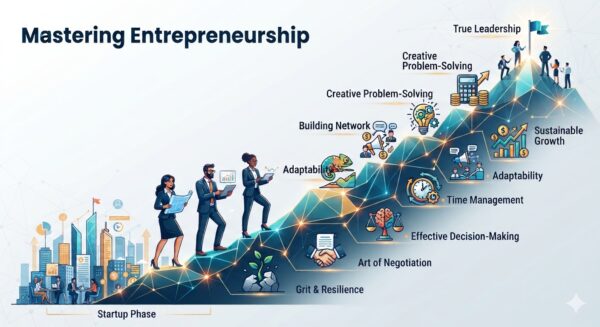
True Leadership: There are always strong leaders at the core of every successful company. Entrepreneurs must inspire and motivate teams, make crucial decisions, and decide the course of the business. Strong leadership fosters a culture of trust, morale, and maximising the productivity.
Financial knowhow: A deep understanding of the art of number crunching is non-negotiable. An entrepreneur must have a firm command on the cash flow, budgeting, accounting, and financial forecasting. These are vital for keeping the company operations afloat and making it a sustainable venture.
Creative problem-solving: Expecting the unexpected is the tagline that defines the journey of entrepreneurship. Entrepreneurs must be equipped to think critically under pressure and discover innovative, practical solutions to short and long-term problems. Staying calm and keeping the feet ground will hold you from taking impulsive decisions.
Sales & marketing math: Get your sales and marketing math right as no product or service sells itself. Effective sales and marketing strategies are key to increasing market outreach, promoting brand identity, generating quality leads, and building lasting customer relationships. You need to learn how to tell a compelling story, connect with your target audience, and build relationships that turn curious onlookers into loyal customers.
Building network: Succeeding in a venture entirely on your own is almost a myth. Cultivating a robust network of mentors, industry peers, and strategic partners is vital for gaining valuable and timely feedback, managing resources, and uncovering new opportunities. Instead of just collecting business cards, focus on building real relationships with mentors, peers, and partners. You will surprise yourself.
Adaptability: Change is the only constant in entrepreneurship as markets shift, new technologies emerge, and customer preferences evolve. Successful entrepreneurs must remain flexible to these hiccups and open to change, adapting their strategies to navigate shifting industry landscapes seamlessly. Flexibility to pivot strategies without losing the ultimate vision is the key.
Time management: Balancing a multitude of responsibilities needs exceptional time management. A day is 24 hours for everyone and prioritising tasks effectively contributes to productivity and helps prevent burnout.
Even as the to-do list never ends, the trick lies in finding and pursuing the immediate task at hand.
Effective decision-making: Entrepreneurs often find themselves facing high-stakes decisions. Developing strong decision-making abilities, coupled with the capacity to accurately assess and mitigate risks, is essential for steering the company forward. Developing the gut instinct and analytical skill to make a decision and own the risk is essential.
Art of negotiation: From closing deals with clients to securing terms with investors and suppliers, negotiation skills are paramount. Effective negotiating ensures favorable business terms and helps build strong, mutually beneficial partnerships. Be it pitching an idea before investors, haggling with a supplier, or hiring team members, negotiating abilities will take you far.
Grit and resilience: No entrepreneurship is possible without setbacks, hurdles, and occasional failures. Long-term success relies heavily on resilience and possessing the relentless drive to learn from mistakes and keep pushing. What separates successful entrepreneurs from the rest is simply the refusal to quit, and the capacity to treat every setback as a masterclass in business.