
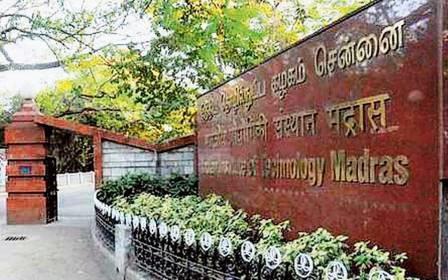

Chennai: The Indian Institute of Technology (IIT) Madras is spearheading a groundbreaking project to map the human brain cell by cell, merging neuroscience, engineering, and advanced imaging technologies.

At the heart of this initiative is the Sudha Gopalakrishnan Brain Centre (SGBC), which has grown from just five members to a team of over 200 doctors, scientists, technicians, and engineers. The centre, led by Professor Mohanasankar Sivaprakasam of the Department of Electrical Engineering, has developed indigenous technologies to digitise human brains with ultra-high resolution. The process involves freezing, slicing, staining, and scanning brain tissue using large-scale equipment built in collaboration with an Indian company.
According to IIT Madras, each digital brain can generate nearly 1.5 petabytes of data, creating one of the most comprehensive repositories of human brain information worldwide. With 400+ donated brains and global collaborations, SGBC is building an open-access resource to advance research into neurological diseases and deepen scientific understanding of the brain.
The centre is headed by Prof Sivaprakasam, with Dr Richa Verma serving as Scientific Director. IIT Madras highlighted that SGBC’s mission is to “map the entire human brain and share it with the world,” positioning India at the forefront of global neuroscience research.
How do you map something as complex as the human brain? At IIT Madras, neuroscience, engineering and advanced imaging are coming together to take on this extraordinary challenge.
From the laboratories of IIT Madras in Chennai to readers in Colombia, Zioon87PR is bringing the… pic.twitter.com/7hUdBmS36w
— IIT Madras (@iitmadras) September 23, 2026
Comments are closed.