
NIT-Rourkela Scientists Decode Sugar Molecules For Stronger Bone Repair
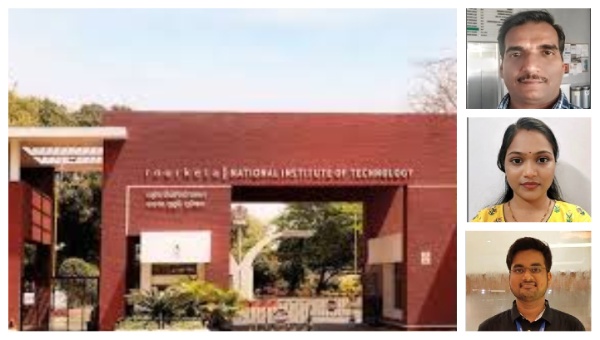
A team led by Prof Harekrushna Sahoo from the Department of Chemistry, along with research scholars Devi Prasanna Behera and Suchismita Subadini, investigates how different GAGs affect BMP-2 under chemical stress.

BHUBANESWAR: The National Institute of Technology (NIT) Rourkela, Researchers have uncovered how natural sugar-like molecules in the human body can alter the behavior of Bone Morphogenetic Protrin-2 (BMP-2), a protein responsible for bone formation and repair.
Their findings, published in Biochemistry, provide insights for enhancing bone and cartilage repair, improving medical implants, and creating more effective protein-based drugs. Proteins, essential for building tissues, transmitting signals, and facilitating chemical reactions, must fold into precise 3D structures to perform these functions effectively.
Changes in their structure can affect how well they work. Understanding why and how proteins unfold is a major goal in biology, with applications ranging from drug delivery to tissue engineering.
The BMP-2plays a crucial role in forming bones and cartilage, healing injuries, and guiding stem cells to become bone-forming cells. However, in the human body, this protein interacts with different Glycosaminoglycans (GAGs), special sugar-like molecules found in connective tissues and joint fluids.
The team led by Prof Harekrushna Sahoo from the Department of Chemistry along with research scholars Devi Prasanna Behera and Suchismita Subadini, investigated how different GAGs affect BMP-2 under chemical stress.
It was observed that Sulfated Hyaluronic Acid (SHA), a glycosaminoglycan (GAG), accelerates the unfolding of BMP-2 compared to regular hyaluronic acid or no additives. SHA interacts directly with BMP-2, modifying its structure for a more controlled unfolding process.
Sahoo noted that BMP-2 operates in a GAG-rich bone tissue environment, where these interactions influence its structure and stability. “These insights allow scaffold designs to actively preserve BMP-2’s functional conformation, prolong bioactivity, lower dosage needs, and reduce side effects. Furthermore, the work offers a mechanistic basis for tailoring GAG functional group modifications to modulate protein structure and activity, guiding next-generation pharmaceutical formulation,” he added.
This could enhance drug formulations, extend protein shelf life, and improve therapeutic delivery.
By mapping these detailed molecular relationships, the NIT Rourkela study offers a foundation for regenerative medicine, highlighting the importance of tailoring protein environments.
Comments are closed.