
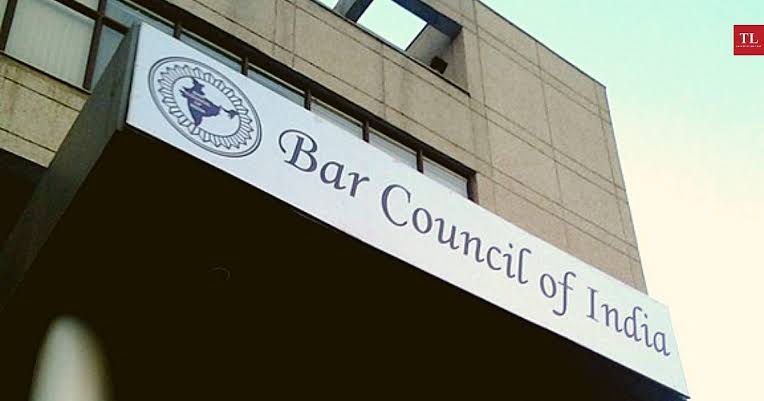

New Delhi: The Supreme Court on Wednesday observed that it will examine whether the Bar Council of India (BCI), as a statutory regulator of the legal profession, has the authority to control and regulate law colleges or universities.

A Bench comprising Chief Justice of India Surya Kant, Justice Joymalya Bagchi and Justice V Mohana raised doubts over the BCI’s role in academic regulation.
The court remarked that while the BCI could frame broad guidelines, such as prescribing whether a law course should run for four or five years, it could not exercise direct control over legal education. “How can BCI regulate law colleges? That’s the real question,” the CJI said, adding that regulation of law schools ought to involve experts in academic fields.
The bench was hearing petitions challenging the functioning of the BCI-PEARL FIRST Trust and the establishment of law institutions by the Trust.
Advocate Prashant Bhushan, appearing for the petitioners, argued that the BCI abolished its earlier Trust in 2016 and transferred funds to a new one, which is now under CBI investigation. He alleged that BCI Chairman Manan Kumar Mishra declared himself a lifetime trustee and that the Trust subsequently established law colleges in Goa and Andhra Pradesh.
Bhushan further challenged two state legislations, contending that they effectively placed the institutions under BCI’s control. “The Acts say BCI will nominate 27 out of 35 members of the Executive Council. It also says the Trust will run the law colleges,” he submitted. He also raised concerns over the proposed fee structure, citing a charge of Rs 25,000.
Senior Advocate Guru Krishna Kumar, representing the BCI, informed the Bench that following earlier judicial observations, the Council had passed a resolution ensuring there would be no lifetime trustees and that trustee tenure would be co-terminus with BCI membership.
The CJI noted that the country’s first law school had also been established by the BCI.
Bhushan countered that the institution was a public university and its Executive Council was not dominated by the BCI. Summing up, the court emphasised that the BCI’s statutory role begins after a person obtains a licence to practise law, and questioned whether that role extends to regulating law schools or universities.
Comments are closed.