
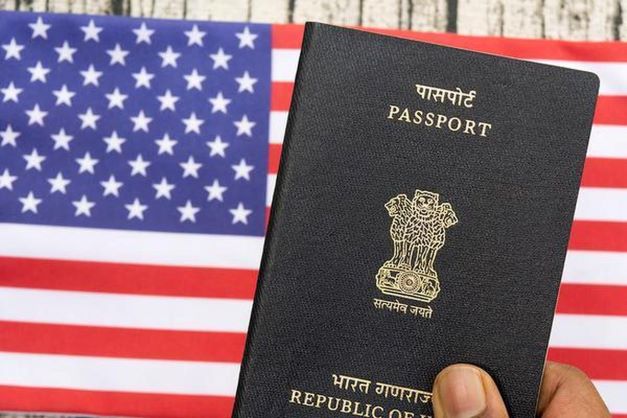
Trump’s Revised Visa Policy To Affect Indian Students Planning To Study, Work in USA
The Trump administration has hiked the visa fee to $100,000, saying that the move aims at ensuring that the people being brought into the country are “actually very highly skilled” and do not replace American workers.

NEW DELHI: In a move that could affect the career prospects of Indian students in the United States, President Donald Trump has signed a proclamation imposing a steep annual fee of $100,000 on H1-B visas.

The decision, part of the administration’s broader crackdown on immigration, is expected to hit Indian professionals and students the badly, given their significant presence in American universities and the technology sector.
The H-1B visa remains one of the most sought-after US work permits, providing American companies with access to skilled global talent pool while giving global professionals the opportunity to gain work experience in the USA.
Every year, thousands of Indian students go to the US for its world-class education system and the promise of global career opportunities.
For many of them, the H1-B visa has traditionally served as a crucial bridge from higher education to long-term employment and permanent residency in the US.
In recent years, growing demand, strict annual quotas, and the uncertainty of a lottery-based selection system have made the process increasingly competitive.
According to Open Doors data, Indians constitute the largest international student cohort in the US. In 2023-24, 3,31,602 students from India were enrolled across American universities, accounting for 29 per cent of all international students.
Raises uncertainties
The new annual fee raises uncertainty over whether companies will continue to sponsor international graduates after they complete their studies.
While the H1-B programme allows skilled workers to stay for up to six years, the new cost could make employers reluctant to retain foreign workers, especially those in the early stages of their careers.
The announcement has unsettled thousands of Indian students who had planned to transition from F-1 student visas to H1-B visas upon graduation.
With Green Card backlogs already stretching into decades for Indians, the new rule could force many to either return home or look for opportunities in other countries with friendlier immigration policies.
The fee hike may push Indian students to reconsider studying in the US, as the return on investment isd on the decline. Many may instead look at countries like Canada, UK, or Australia with friendlier immigration policies.
Overall, the move creates major uncertainty for Indian students, making the “American dream” of studying, working, and settling in the US harder to achieve.
White House officials defended the move as a way to “stop the abuse” of the H1-B programme, which they claim has displaced American workers.
Commerce Secretary Howard Lutnick said the change would ensure that only “extraordinary people at the very top” are brought in, while Trump added that the programme would now “pretty much ensure” that only the most valuable workers are retained.
The Trump administration has unveiled a new “Gold Card” pathway, which offers expedited visa and Green Card access to individuals or companies willing to pay between USD 1–2 million. But for most Indian students, this option remains financially unviable.
Comments are closed.