
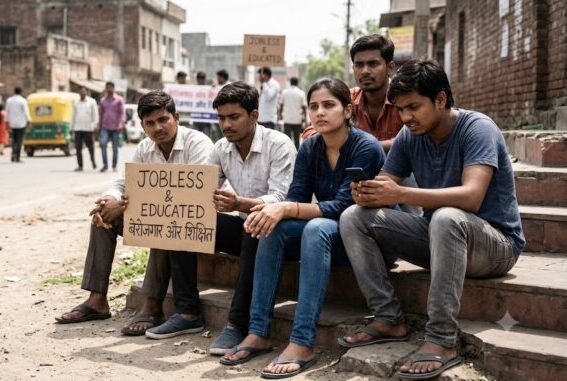

A looming employment crisis could leave around 800 million young people without jobs in developing economies unless governments act swiftly, according to the United Nations Development Programme (UNDP).

Speaking during the World Bank Group and International Monetary Fund Annual Meetings in Bangkok, UNDP Administrator Alexander De Croo warned that around 1.2 billion young people are expected to enter the global workforce over the next 15 years. However, current projections indicate that only about 400 million jobs will be available, creating a shortfall of roughly 800 million positions, OWSA reported.
What’s The Solution?
De Croo said the crisis is not inevitable and can be addressed through targeted policies and investment. He stressed that job creation remains the most effective long-term route out of poverty, particularly in developing countries where large youth populations are entering labour markets every year.
The challenge is especially acute in nations where the median age ranges between 18 and 25. While rapid technological change, including artificial intelligence, is reshaping labour markets, De Croo noted that sectors such as healthcare, agriculture, tourism and care services will continue to generate significant employment opportunities.
The warning comes amid growing concerns over poverty. According to the latest Multidimensional Poverty Index, 1.2 billion people now face overlapping deprivations in health, education and living standards. More than half are children, while the vast majority live in rural communities across sub-Saharan Africa and South Asia.
Bridging Investment & Employment
In response, the UNDP has launched two major initiatives aimed at turning economic growth into jobs: the Investment Accelerator and the Jobs for Prosperity Facility.
The programmes are among five flagship initiatives supporting the organisation’s Strategic Plan for 2026-2029 and are being developed in partnership with institutions including the World Bank Group, the European Investment Bank and the European Bank for Reconstruction and Development.
Pilot projects are already under way in Nepal, Yemen, Haiti, Lebanon and Ghana.
The Investment Accelerator will support governments in improving investment policies, strengthening legal frameworks and developing investment-ready projects. Its goal is to help countries move projects more quickly from planning to implementation.
Meanwhile, the Jobs for Prosperity Facility will focus on identifying industries with strong employment potential, aligning workforce training with market needs and removing barriers that discourage businesses from hiring and investing.
Together, the initiatives aim to boost productive investment, support business growth and create sustainable, better-paying jobs.
UNDP said it already works with more than 100 countries on financing frameworks and has identified over 700 Sustainable Development Goal investment opportunities across more than 50 nations. Since 2022, its programmes have helped align or mobilise more than $920 billion in public and private financing towards development goals.
Triple Shocker For Developing Economies
The employment challenge is being aggravated by wider economic pressures facing developing nations.
De Croo described the situation as a “triple shock” driven by high energy prices, the impact of one of the strongest El Niño events since 1950 and elevated borrowing costs.
A new UNDP report, ‘No Time to Recover: Compounding Crises, Depleted Fiscal Buffers, and What It Means for Developing Economies’, highlights the financial strain many governments are experiencing.
The report found that the median developing country now spends 9.5 per cent of its total government income on interest payments alone, the highest level in 25 years and more than three times the proportion spent by high-income countries.
UNDP believes greater collaboration with the private sector can help address these challenges by reducing investment risks and supporting projects capable of generating jobs and economic growth, the OWSA report said.
International Implications
The consequences of failing to create enough jobs extend far beyond national borders.
Large-scale youth unemployment could fuel social instability, increase migration pressures and weaken economic growth across regions. By contrast, expanding employment opportunities would accelerate poverty reduction, strengthen consumer markets and support more balanced global development.
UNDP argues that connecting investment, business growth, skills development and labour market policies more effectively is key to closing the gap.
While the newly launched initiatives offer a framework for action, their success will depend on sustained political commitment, adequate financing and governments’ ability to implement reforms that translate investment into meaningful employment.
With hundreds of millions of young people set to enter the workforce over the coming decade and a half, policymakers face a critical challenge: turning economic potential into jobs before a generation’s opportunities are lost.