

New Delhi/Bhubaneswar: India will mark its largest-ever participation at the 48th WorldSkills Competition in Shanghai, China, from September 22 to 27, with nearly 70 competitors set to showcase talent across 63 of the 64 skill categories.

For the first time, Team Skill India will compete in 11 new domains, including Dental Prosthetics, Digital Interactive Media Design, Intelligent Security Technology, Landscape Gardening, Optoelectronic Technology, Retail Sales, Unmanned Aerial Systems, Industrial Mechanics, Software Testing, Heavy Vehicle Technology, and Aircraft Maintenance.
The Ministry of Skill Development and Entrepreneurship (MSDE), along with the National Skill Development Corporation (NSDC), is leading preparations in collaboration with industry partners and training institutions. MSDE Secretary Debashree Mukherjee said India’s participation reflects the evolution of its skilling ecosystem toward “future-facing and globally relevant capabilities.”
With India’s global skills ranking improving steadily—from 29th in 2015 to 13th in 2024—the expanded participation at Shanghai 2026 underscores the country’s ambition to establish itself as a global hub for skilled talent.
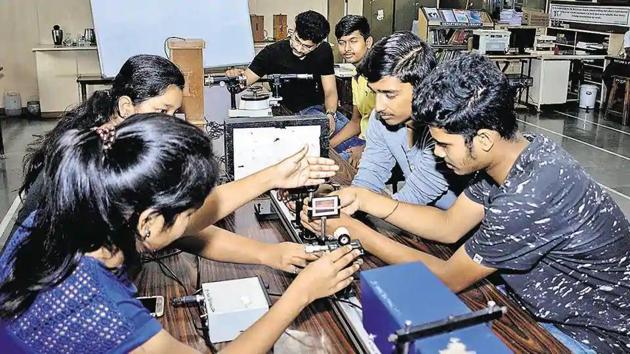
A significant share of the credit goes to Odisha, which has emerged as a national skilling hub. The World Skill Center in Bhubaneswar, India’s largest skill development facility, is training youth in several of the new categories.
Odisha’s Skill Development Minister Sampad Chandra Swain recently declared, “Skill is the new currency for success,” while Commissioner-cum-Secretary Bhupendra Singh Poonia highlighted the state’s focus on next-generation skills such as Spatial AI, aviation, and semiconductor technologies.
CEO of WSC, Rashmi Ranjan Mohapatra, noted that Odisha is expanding the model with new centers in Sambalpur and Berhampur, offering courses in renewable energy, agri-tech, marine technology, and healthcare assistance. “We want to take skilling to more sectors and regions. The new centres will allow us to respond more closely to the requirements of local industries and emerging job markets,” Mohapatra said.